
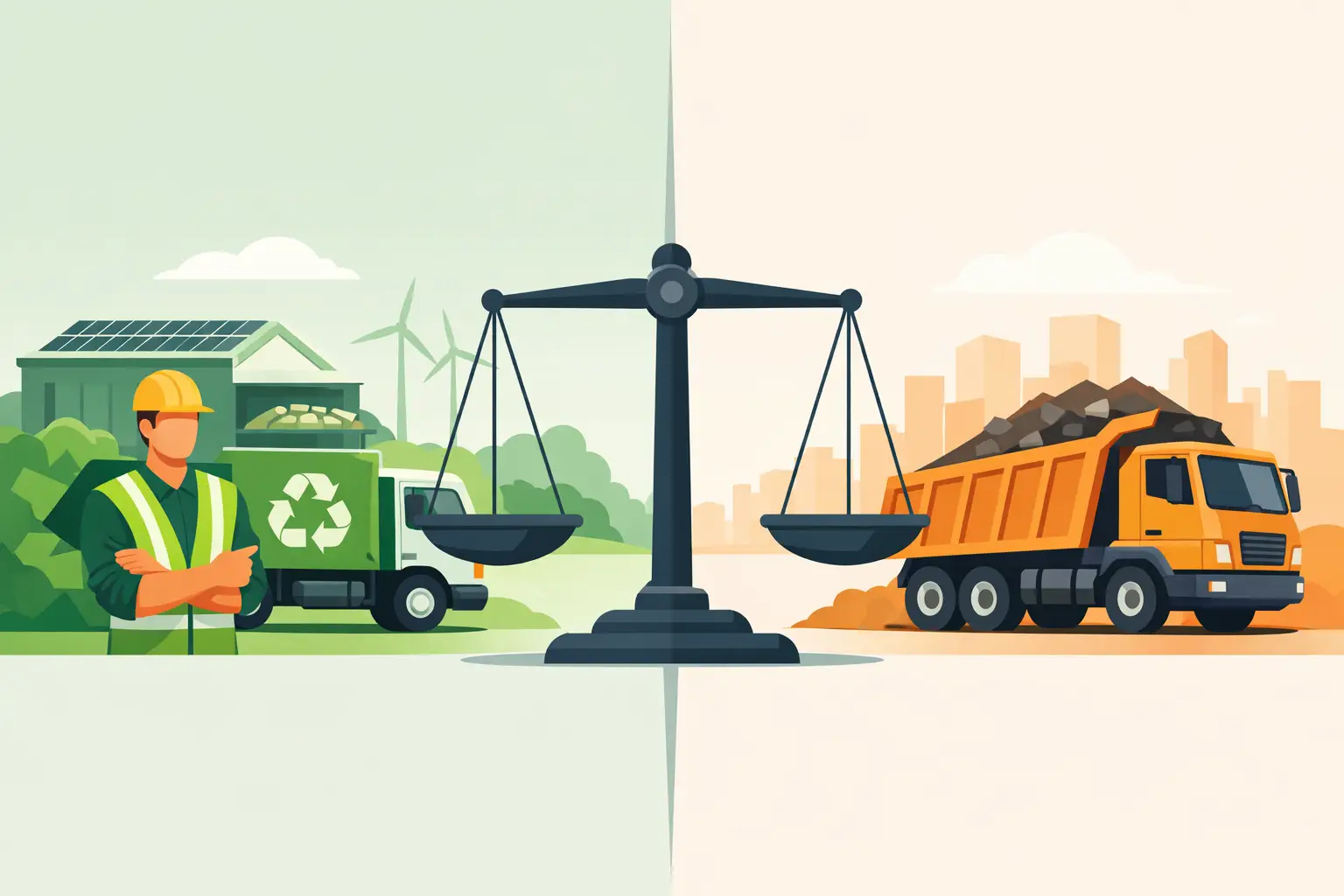
A truck arriving to remove old computers may solve an immediate storage problem. It does not automatically solve your data-security, environmental, or compliance obligations. The difference between a certified recycler vs hauler matters because the party that picks up equipment may not be the party that ultimately processes it – or documents what happened to it.
For Bay Area businesses, schools, nonprofits, and public agencies, electronics disposal is not just a facilities task. Retired servers, laptops, phones, networking equipment, and storage devices can hold confidential information long after employees stop using them. They also contain materials that require responsible downstream handling. Before scheduling a pickup, understand what service you are actually buying.
Certified Recycler vs Hauler: The Core Difference
A hauler is primarily a transportation provider. The company may collect equipment from your office, warehouse, campus, or data center and move it to another location. Hauling can be a legitimate and useful part of an electronics recycling program, especially when equipment must be removed quickly from multiple sites or from difficult-access areas.
But hauling alone does not establish where the material goes, how data-bearing devices are handled, whether equipment is reused or dismantled, or whether hazardous components are managed correctly. A hauler may deliver the load to a recycler, broker, consolidator, resale company, or another intermediary. Some operate under clear downstream agreements; others provide little visibility after pickup.
A certified recycler is evaluated against a defined recycling standard and operates under documented procedures for managing electronics. The specific certification matters, as do its scope, current status, and the facility covered by it. Common standards in the electronics recycling industry include R2 and e-Stewards. These programs address areas such as environmental health and safety practices, downstream vendor controls, data security procedures, and material tracking.
Certification is not a substitute for asking questions. It is evidence that a recycler has been assessed against a recognized framework. Your organization should still confirm that the vendor’s certification is current, applies to the service being provided, and covers the facility that will receive or process your equipment.
Why Pickup Is Only the First Step
A pickup receipt proves that equipment left your location. It is not necessarily proof that data was destroyed or that the material was recycled responsibly. Organizations often discover this distinction when an auditor, client, insurer, or internal security team asks for records months later.
For example, a hauler might remove 100 laptops and provide a general bill of lading. That document can be useful for logistics, but it may not identify hard drives by serial number, state the destruction method, or provide a certificate of destruction. If your policy requires verified destruction of storage media, general collection paperwork is not enough.
The same issue applies to environmental reporting. A vendor may say that equipment will be “recycled,” but your organization needs to know whether usable assets will be tested and reused, whether batteries and other regulated components will be separated, and how non-reusable materials will be managed. Responsible recycling requires more than moving a mixed load out of a storage room.
Data Security Requires a Defined Chain of Custody
Data-bearing equipment deserves special handling from the moment it is removed. This includes desktops, laptops, servers, external drives, RAID arrays, network appliances, mobile devices, copiers, and multifunction printers. A device that will not power on may still contain recoverable information.
Ask a prospective provider how custody is documented from pickup through final processing. The answer should be specific. You should understand whether equipment is sealed or secured in transit, where it is taken, who has access, and how devices are identified. If your organization requires serial-number reporting, confirm that requirement before pickup rather than assuming it is included.
Destruction options also need to match the asset and your policy. Logical wiping may be appropriate for devices intended for reuse when it is performed under a documented process. Physical destruction, including hard-drive shredding, may be required for failed drives, highly sensitive data, or policy-driven disposition. A certificate of destruction should state what was destroyed and, when needed, connect the destruction record to identifiable assets or media.
A hauler may be able to transport equipment securely. That can be valuable. Still, secure transport and verified data destruction are separate services. The organization accepting responsibility for the destruction process should be able to explain it clearly and provide the records your team needs.
Questions to Ask Before You Schedule Service
The right vendor can include both collection logistics and certified processing, or it can be a hauler working within a documented recycler relationship. What matters is visibility, accountability, and records. Before approving a pickup, ask practical questions such as:
- Will your company process the equipment, or transfer it to another company?
- Which facility will receive the material, and what current certifications apply there?
- How are hard drives, SSDs, phones, and other data-bearing devices secured during collection and transport?
- What documentation will we receive for pickup, recycling, asset disposition, and data destruction?
- Can you provide serial-number reporting when required?
- How are batteries, CRT displays, printers, and other special-handling items managed?
Pay attention to vague answers. A responsible provider should not treat questions about downstream handling, security, or paperwork as unusual. These are routine requirements for commercial electronics recycling.
Match the Service Level to Your Equipment
Not every load needs the same process. A small office clearing out monitors, keyboards, and non-data peripherals may mainly need convenient collection and environmentally responsible recycling. A data center decommissioning servers and storage arrays needs a much more controlled chain of custody, detailed asset records, and defined destruction requirements.
Asset value can also affect the decision. Newer laptops, servers, networking gear, and mobile devices may have resale or buyback value if they are functional and can be processed securely. Older or damaged equipment may be better suited for material recovery. A competent provider should distinguish between equipment that can be reused, equipment requiring destruction, and items that carry special disposal charges or handling needs.
Be clear about the inventory before requesting service. Mixed electronics loads often include batteries, printers, copier equipment, monitors, and other items that require different processing paths. Accurate information helps the provider schedule the right truck, labor, containers, and documentation. It also prevents surprises about pickup eligibility or fees.
Compliance Is More Than a Marketing Claim
California organizations have particular reason to verify electronics disposal practices. Electronics, batteries, and display devices can contain regulated materials, and improper handling can create environmental and reputational exposure. Your organization may also have contractual, privacy, insurance, or records-retention obligations that go beyond baseline recycling requirements.
Look for service terms that explain what is accepted, what requires special handling, and what records are available. A provider should be willing to identify limitations as well. For instance, a free commercial pickup may depend on minimum volume, equipment mix, access conditions, or service location. Smaller loads and specialized items may carry fees. Straight answers are better than a low-price promise followed by unclear exceptions.
The goal is not to make every electronics pickup complicated. It is to make the responsibility clear. If one company collects equipment and another processes it, the relationship should be documented. If data destruction is requested, the method and reporting should be agreed upon in advance. If reusable assets are being liquidated, define approval rules and expected reporting.
A Practical Standard for Vendor Selection
Choose a provider that can explain the complete path from your loading dock to final disposition. You should know who picks up the equipment, who receives it, how data is handled, what happens to reusable assets, and which documents your organization will retain.
For organizations with recurring IT turnover, building this process once saves time on every future refresh, move, and cleanout. I Got E-Waste supports commercial electronics pickup, secure data destruction, and responsible recycling for qualified organizations throughout the San Francisco Bay Area.
Before the next storage room cleanup becomes urgent, set your documentation and data-destruction requirements first. Then select a collection partner that can meet them without leaving unanswered questions after the truck has left.