
A locked storage room full of retired laptops and servers is not a neutral holding area. It is a data-security problem waiting for the wrong access, the wrong move, or the wrong audit question. That is why a hard drive shredding service review should focus less on marketing claims and more on what actually protects your organization: chain of custody, verified destruction, compliant downstream handling, and pickup logistics that fit your operation.
For most organizations, the right vendor is not simply the one with a truck and a shredder. It is the one that can remove equipment without disrupting staff, document what happened to the media, and handle the rest of the electronics stream responsibly. If you manage IT assets for a business, school, nonprofit, or public agency, those details matter more than flashy promises.
What a hard drive shredding service review should actually examine
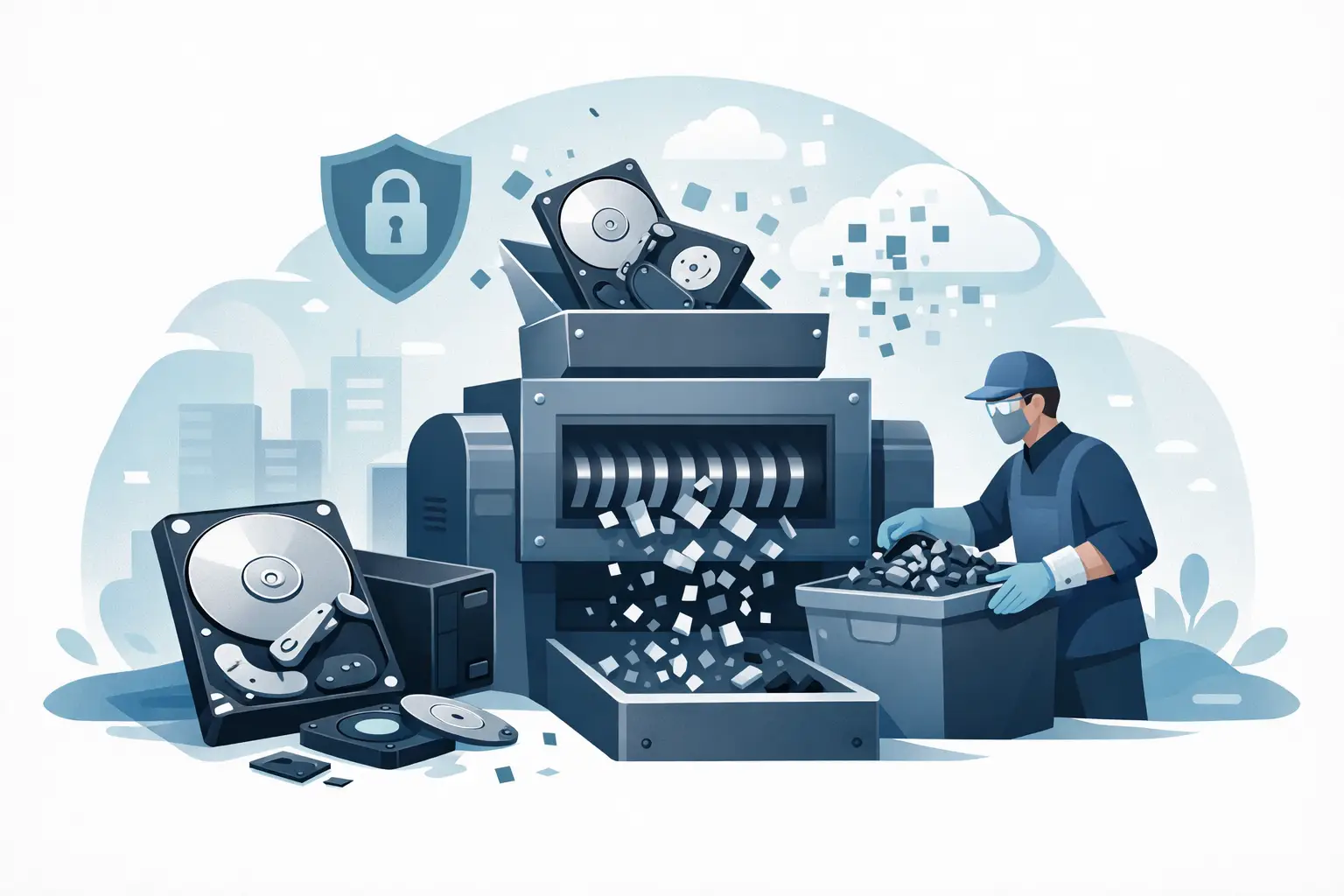
The basic promise of drive shredding is straightforward. A hard drive, solid-state drive, or other storage device is physically destroyed so the data cannot be reconstructed through normal forensic methods. But in practice, the quality of the service depends on everything that happens before and after the shredder does its job.
A useful review starts with custody. Who touches the equipment on site? How is media separated from non-data-bearing electronics? Are assets inventoried before transport, at the truck, or at the processing facility? If your organization has internal signoff requirements, those process points are not minor details. They are the difference between a controlled disposition event and a pickup that leaves unanswered questions.
The second issue is documentation. Many vendors say they destroy drives securely. Fewer explain what records you receive, when you receive them, and whether the paperwork matches your compliance needs. A certificate of destruction has value, but only if it is tied to a real process and usable for your records.
Then there is scope. Some providers only want the drives. Others can remove full systems, networking gear, battery backups, peripherals, and mixed e-waste in the same appointment. For a busy office or data center, that difference affects labor, timing, and cost.
Security claims are easy to make. Process is what counts.
In any hard drive shredding service review, the vendor’s process deserves more attention than the equipment itself. Industrial shredders are not rare. Consistent handling is.
Ask how drives are collected and secured from the moment your staff releases them. If devices are transported off site before destruction, the provider should be able to explain how containers are controlled, how vehicles are managed, and who has responsibility at each handoff. If destruction occurs on site, the question changes slightly: can the provider perform the service without creating confusion, bottlenecks, or unsecured staging areas?
It also helps to ask what media types are accepted under the same destruction workflow. Traditional hard drives, SSDs, backup tapes, and mobile devices do not all move through identical handling steps. A provider that understands enterprise disposition should be clear about those differences instead of treating all storage as the same problem.
There is also a practical trade-off. On-site shredding may feel more direct because your team sees the destruction happen, but it is not automatically the best fit for every job. Off-site destruction can still be secure if chain of custody is strong and documentation is solid. The better option depends on your volume, building access, internal policy, and how much observation your team requires.
Compliance matters beyond the destruction event
Physical destruction addresses data risk, but it does not by itself address environmental responsibility. A provider can shred drives and still mishandle the resulting scrap or the rest of the retired equipment stream. That is why compliance should be part of any serious review.
For Bay Area organizations, this is especially relevant when old servers, desktops, monitors, switches, and accessories are being cleared at the same time. The vendor should be able to explain how electronics are processed under applicable state and federal guidelines, how hazardous components are managed, and how materials are kept out of landfill and improper export channels.
This is where service reviews often miss the point. They focus narrowly on destruction and ignore downstream recycling practices. For organizations with ESG targets, public accountability, or procurement standards, that is a mistake. A secure data-destruction vendor should also be a responsible electronics recycling partner.
Logistics can make or break the service
The operational side of shredding is usually where organizations feel the most friction. That is also where a good provider stands out.
If your team has to spend days sorting, palletizing, carrying equipment downstairs, or coordinating multiple vendors, the service is not really efficient. A practical hard drive shredding service review should look at pickup requirements, minimum volumes, access limitations, appointment windows, and whether the provider can handle mixed loads from offices, server rooms, and storage areas in a single visit.
For example, a company clearing one floor of laptops has a different need than a school district rotating out desktop labs or a medical office disposing of old workstations with attached peripherals. In each case, the service should match the site conditions. Elevator access, loading dock constraints, parking, building management rules, and chain-of-custody needs all affect what “easy pickup” actually means.
Providers that work regularly with commercial clients tend to be better at these details. They understand that the pickup is part of your operations day, not an isolated event. They also tend to be clearer about what qualifies for no-cost pickup, what requires a fee, and what special handling charges may apply.
Pricing should be clear, not vague
A review that ignores pricing structure is incomplete. That does not mean choosing the lowest number. It means understanding what you are paying for and whether the quote reflects the real job.
Some organizations qualify for free pickup when they have enough volume and enough standard business electronics in the load. Others need a paid pickup because the quantity is too small, the mix includes difficult items, or the location creates extra labor. Neither model is inherently better. What matters is whether the vendor states the terms clearly upfront.
Specialized items can also affect cost. Large-format printers, copy machines, batteries, and certain damaged equipment may fall outside a standard electronics pickup. If a provider avoids discussing those exceptions until the truck arrives, that is a problem.
A strong service partner is usually direct about thresholds, labor assumptions, and billing triggers. That clarity helps office managers and procurement teams avoid internal surprises.
Reporting and certificates should support your records
Most organizations do not need paperwork for its own sake. They need records that can withstand internal review, client scrutiny, or compliance checks.
That means asking what you receive after the job. Is there a certificate of destruction? Is there an asset list if inventory was requested? Are quantities described in a way that aligns with your internal asset-retirement process? If the load includes both shredded media and recycled electronics, can the provider document both services clearly?
This is especially important for regulated sectors and larger organizations with multiple approvers. A clean service event can still create administrative headaches if the reporting is late, generic, or disconnected from what was actually removed.
Signs of a reliable provider
A reliable shredding vendor is usually easy to recognize once you know what to look for. The communication is specific. Service terms are clear. Accepted items are defined. Pickup qualifications are stated without hedging. The team answers operational questions directly instead of redirecting everything to sales language.
You should also expect consistency between the provider’s destruction message and its recycling message. If security is presented as meticulous but environmental handling is treated vaguely, that gap is worth noting. The same goes for scheduling. A vendor that cannot explain availability, service area coverage, or site requirements may not be ready for recurring commercial work.
For Bay Area organizations managing frequent refresh cycles, it often makes sense to work with a provider that can handle more than a one-off shred event. If the same company can manage secure destruction, commercial e-waste pickup, and asset disposition support, the process tends to be simpler and easier to repeat.
When shredding is the right choice – and when it is not
Not every retired device needs the same disposition path. Shredding is the right choice when policy, sensitivity, or condition makes physical destruction necessary. That often includes failed drives, untracked legacy media, highly sensitive storage devices, and equipment leaving environments with strict data-handling rules.
But there are cases where other disposition methods may also be part of the discussion, especially if hardware still has remarketing value and data can be handled under a documented sanitization process. The key is not to assume one method solves every asset class in every scenario. A good provider should be able to explain the difference without oversimplifying the decision.
For organizations that want a straightforward process, that practical mindset matters. At I Got E-Waste, Inc., the most useful conversations usually start with volume, item mix, building access, and data-destruction requirements – not with generic promises.
If you are evaluating vendors, keep the review grounded in operations. Ask how the pickup works, how custody is controlled, what records you receive, and what happens to everything after destruction. The right answer is rarely the loudest one. It is the one your team can rely on when the storage room needs to be cleared and the risk needs to be gone.