

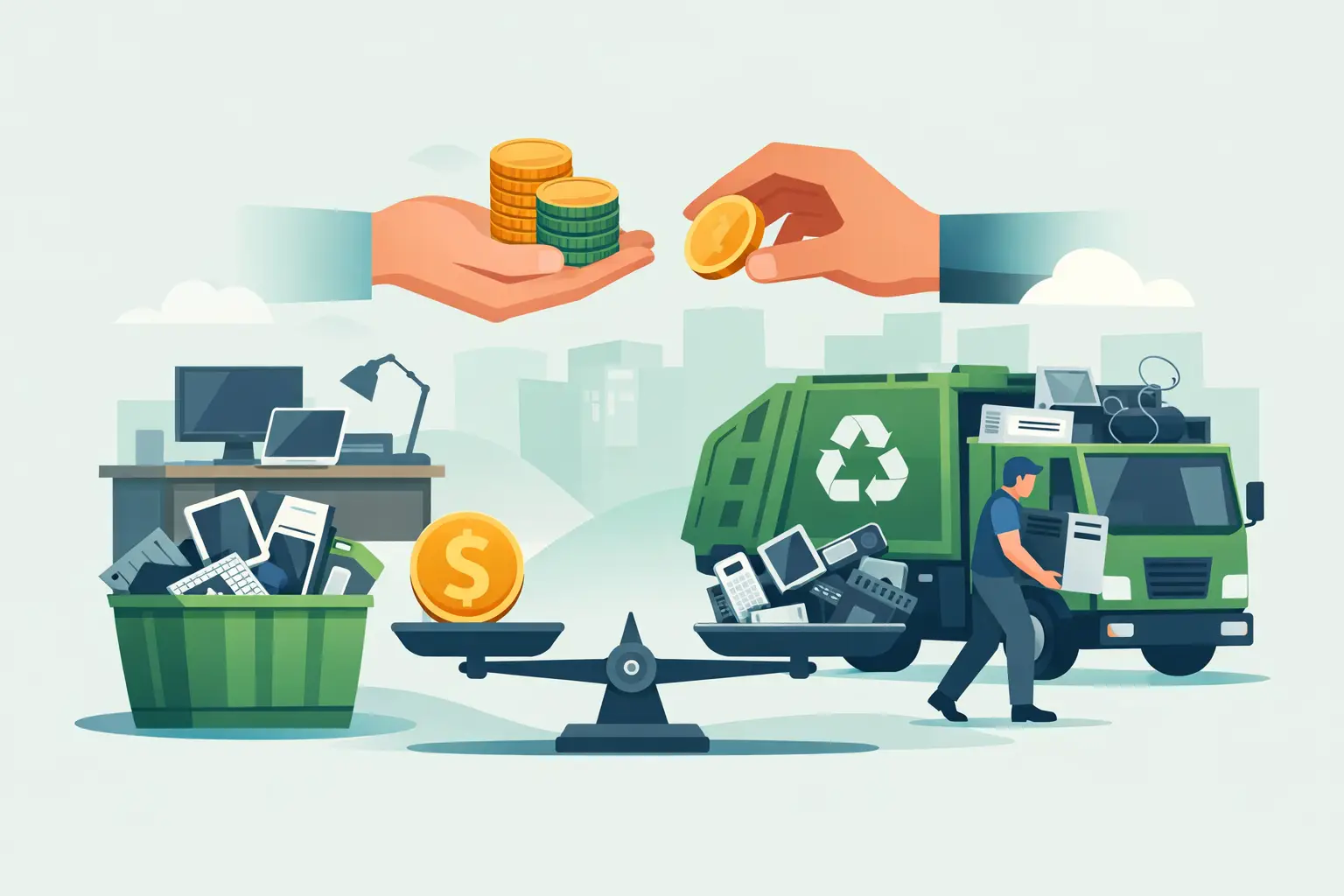
A storage room full of retired laptops and monitors is not just taking up space. It can create data-security, environmental, and logistical problems that someone on your team eventually has to solve. So, does e-waste pickup cost money for a business? Sometimes. The answer usually depends on the volume, type, condition, and location of the equipment, plus whether the pickup requires specialized handling or data destruction.
For many organizations, commercial e-waste pickup can be free when the load meets a recycler’s minimum quantity and contains equipment with recoverable value. Smaller collections, certain difficult-to-recycle items, and specialized services may carry a charge. Knowing the difference before scheduling helps your team avoid surprises and choose a disposal plan that meets both budget and compliance requirements.
When e-waste pickup may be free
Free pickup is commonly available for qualified commercial loads. A qualified load generally means there is enough material to justify the truck, labor, sorting, and downstream recycling process. Businesses replacing an office’s computers, clearing a server room, consolidating locations, or completing an IT refresh are often in the best position to meet minimum volume requirements.
The items in the load matter as much as the quantity. Computers, laptops, servers, network equipment, monitors, mobile devices, and many standard peripherals are commonly accepted as part of commercial recycling pickups. Equipment that can be repaired, reused, harvested for parts, or processed efficiently helps offset the cost of collection and recycling.
Free pickup does not mean the material is handled casually. A responsible provider should transport electronics through established recycling channels and follow applicable state and federal requirements. For Bay Area organizations, that includes avoiding landfill disposal and ensuring material is not improperly exported or abandoned by an unqualified downstream vendor.
Why some e-waste pickups cost money
Pickup fees are usually based on real handling and processing costs, not an arbitrary charge. When a recycler cannot recover enough value from the material to cover transportation, labor, and responsible recycling, a fee may be necessary.
Small-quantity pickups are one common example. Sending a vehicle and crew for a few devices can cost more than the recyclable value of those items. If your office has only several laptops or a small stack of monitors, a paid pickup may be the practical option unless you can combine the material with other retired equipment or wait until your next refresh cycle.
Certain items also require extra labor, special processing, or separate disposal procedures. Large-format printers, copy machines, and similar equipment can be heavy, difficult to move, and expensive to dismantle. Batteries, damaged equipment, and devices containing specialized components may require additional handling as well.
Access conditions can affect the quote, too. Equipment spread across multiple floors, secured facilities, limited loading access, after-hours requirements, or multiple service locations can add time and labor. That does not mean a fee will always apply, but it is why an accurate description of the pickup is useful from the start.
Data destruction is a separate service decision
Recycling an old computer is not the same as proving its data was destroyed. If your retired hard drives, solid-state drives, servers, or mobile devices contain confidential records, the question is not only what pickup costs. It is also what level of data protection your organization needs.
Secure data destruction may include documented wiping, physical hard-drive shredding, serialized asset tracking, or a certificate of destruction. The appropriate method depends on your internal policy, customer obligations, regulatory requirements, and the sensitivity of the data involved. These services can add cost, particularly when equipment must be tracked by serial number or drives need to be removed and processed individually.
For many IT managers, that added cost is justified. A free pickup is not a savings if a retired drive later creates an avoidable data exposure. Ask upfront whether your selected service includes data destruction, what method is used, and what documentation your organization will receive.
How to find out whether your pickup qualifies
The fastest way to determine whether e-waste pickup is free is to provide a clear equipment inventory. It does not have to be perfect, but it should be specific enough for the recycler to assess the load.
Include approximate quantities of desktops, laptops, servers, monitors, printers, networking equipment, phones, batteries, and other electronics. Identify items that may require special handling, such as copiers, large-format printers, broken screens, swollen batteries, or equipment stored in difficult-to-access areas. If the equipment is spread across offices or campuses, note each pickup location.
It also helps to state whether you need hard-drive shredding, certificates of destruction, asset reports, or equipment buyback evaluation. These details allow the provider to distinguish between standard recycling, a qualified free pickup, and a project that requires a custom quote.
Photos can be helpful when your team is unsure how to describe a large amount of equipment. They give the recycler a realistic view of volume, palletization, access, and unusual items before a truck arrives.
The cost of choosing the wrong recycler
The lowest pickup price is not always the lowest-risk option. Businesses and institutions are still responsible for selecting vendors carefully, especially when the load includes devices that store employee, customer, student, patient, financial, or operational data.
A recycler that offers vague answers about downstream handling, data destruction, or documentation may create more risk than savings. Improper disposal can lead to data loss, compliance issues, environmental harm, and reputational damage. It can also leave your staff with incomplete records when an auditor, customer, or internal stakeholder asks what happened to retired assets.
A qualified commercial provider should be able to explain what it accepts, which items may require fees, how data-bearing equipment is handled, and what records are available after service. Clear terms are a good sign. So is a willingness to identify items that are outside a free-pickup program before scheduling.
Ways to reduce e-waste pickup costs
The simplest cost-control strategy is to plan disposal as part of your asset lifecycle instead of treating it as an emergency cleanup. Hold retired equipment in a secure, organized staging area until you have enough volume for a qualified pickup. Combining equipment from several departments can also help meet minimum requirements.
Before scheduling, separate standard IT equipment from items likely to require special handling. Keep batteries contained and identified. If possible, place smaller electronics in boxes or on pallets, and make sure the pickup team has a clear path to the loading area. Better preparation can reduce labor time and prevent delays.
Organizations with reusable equipment should also ask whether asset liquidation or buyback is available. Newer, working laptops, desktops, servers, and network equipment may have residual value. That value may help offset service costs, although condition, age, specifications, and market demand all affect the outcome.
Do not delay data decisions until the truck arrives. Determine whether each device will be wiped, shredded, retained, redeployed, or sold before pickup day. This reduces last-minute handling changes and helps preserve a clean chain of custody.
What Bay Area organizations should expect
For commercial clients in the San Francisco Bay Area, I Got E-Waste provides free e-waste pickup for qualified loads and fee-based options for smaller quantities or items requiring specialized disposal. The practical next step is to request service with an item list, estimated quantities, pickup address, access details, and any data-destruction requirements.
A clear inventory turns a general question about cost into a workable plan. Whether your pickup qualifies for free service or requires a quoted fee, the goal is the same: move retired technology out of your workspace, protect sensitive information, and document responsible recycling without creating another operational task for your team.