
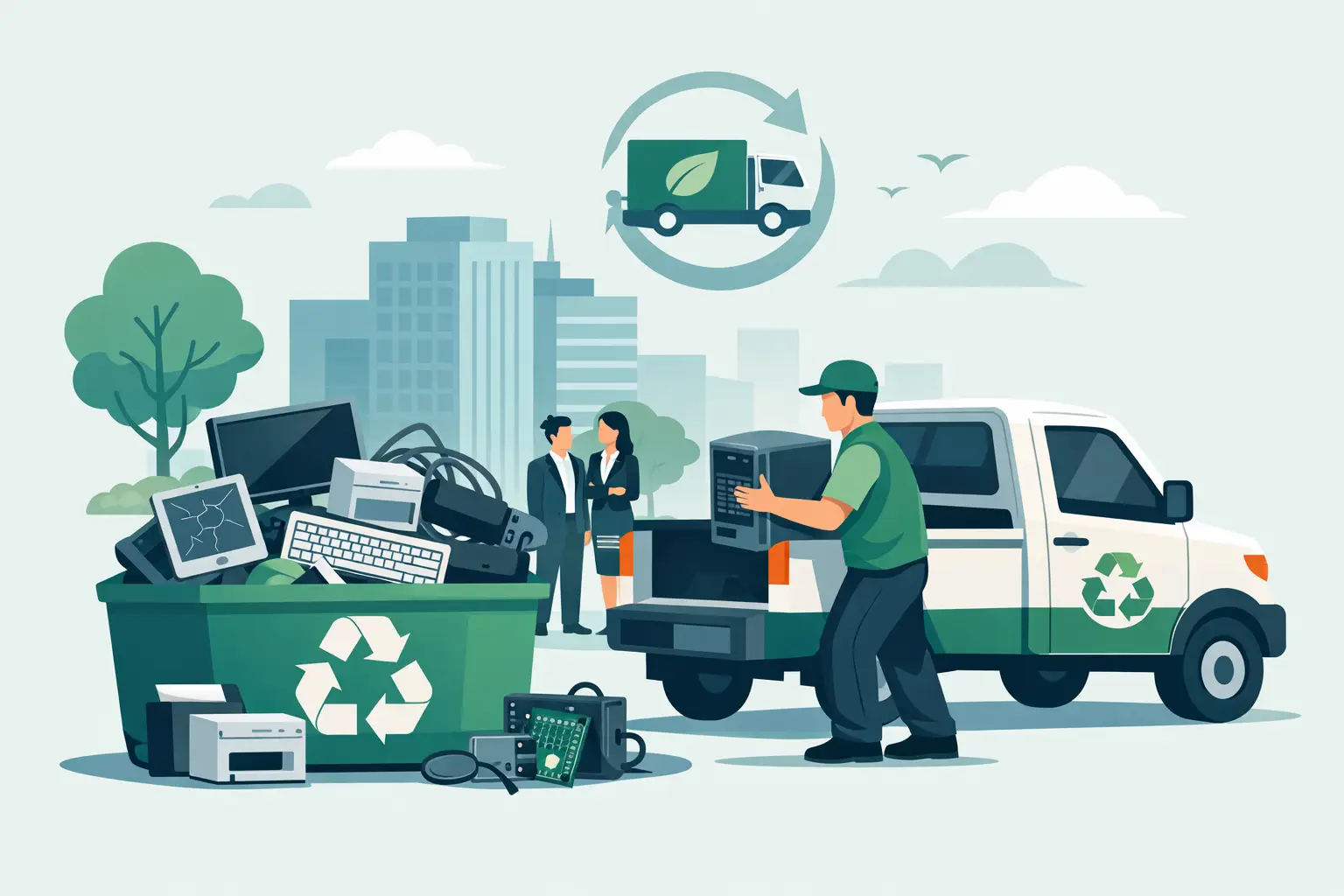
That back room full of retired monitors, dead laptops, obsolete switches, and boxed-up hard drives is not just taking up space. For many organizations, it is a compliance issue, a data security issue, and a logistics problem waiting too long to be addressed. Free e-waste pickup for businesses can solve all three – but only when the service is structured around qualified commercial volumes, clear acceptance standards, and responsible downstream handling.
For office managers, IT teams, school administrators, facilities staff, and operations leads, the real question is not whether old electronics need to go. It is how to move them out efficiently without creating new problems. A credible business pickup program should make disposal easier, not riskier.
What free e-waste pickup for businesses usually means
The phrase sounds simple, but in practice it has specific conditions. In commercial recycling, free pickup is typically available for organizations that have enough volume to justify routing, labor, and processing costs. That usually means a meaningful load of business electronics rather than one or two items.
This matters because not all pickups cost the recycler the same amount to perform. A pallet of laptops, desktops, servers, network gear, and LCD monitors is very different from a small mixed load with specialty items that require extra labor or disposal charges. If a provider offers free pickup, qualified volume requirements are usually what make that possible.
For businesses, that is not a drawback. It is a sign that the service is built on operational reality. The better providers are direct about what qualifies, what does not, and which items may carry fees even when the main pickup is free.
Why businesses use pickup instead of self-haul
Self-hauling electronics sounds manageable until someone has to coordinate it. Then the problems show up fast. Equipment may contain data-bearing devices, batteries, or regulated components. Staff time gets pulled away from normal work. Vehicles are rarely suited for loading mixed IT assets safely, and nobody wants to guess whether items are being taken to a compliant processor.
Pickup service shifts that burden to a company that handles business electronics every day. For organizations with recurring refresh cycles, office moves, storage cleanouts, or campus-wide collection needs, that is usually the more controlled option.
There is also the issue of chain of custody. If hard drives, servers, copiers, or employee devices are involved, disposal is not just about recycling. It is about knowing where the material went, how it was handled, and whether data destruction was addressed before anything left the site.
The items that usually qualify
Most commercial e-waste programs accept common IT and office electronics in bulk. That generally includes desktop computers, laptops, servers, monitors, docking stations, printers, networking gear, phones, mobile devices, cables, and related peripherals.
In a business setting, the most pickup-friendly loads usually contain standard electronics that can be sorted and processed efficiently. Computers, flat-screen monitors, rack equipment, and telecom hardware are common examples. Mixed office cleanouts can also qualify if the volume is high enough.
What often changes the pricing is the presence of non-standard or costly-to-handle items. Large copy machines, oversized printers, certain batteries, and damaged equipment may involve special handling. That does not mean they cannot be picked up. It means a serious provider should tell you up front whether those items are free, fee-based, or subject to separate approval.
Compliance is the real value, not just the pickup
The biggest mistake organizations make is treating e-waste removal like junk removal. Business electronics are not ordinary debris. They can contain regulated materials, confidential data, and equipment that should never end up in landfill streams or informal export channels.
A proper commercial recycler should follow state and federal recycling requirements and maintain clear downstream handling practices. For Bay Area organizations, that is especially relevant because California has strict expectations around electronic waste management. If your company, school, nonprofit, or public agency is disposing of obsolete IT assets, you need a service partner that treats compliance as part of the core job.
That includes separating reusable assets from scrap, managing hazardous components appropriately, and keeping materials out of improper disposal channels. A free pickup only has value if the equipment is handled responsibly after it leaves your building.
Data destruction should be addressed before pickup day
If your load includes computers, laptops, servers, phones, external drives, or loose hard drives, the pickup request should include a data review from the start. Too many organizations wait until the truck arrives to ask whether drives can be shredded, serialized, or documented.
That is a preventable risk. Before scheduling, identify which items hold data and what level of destruction your organization requires. Some businesses need physical shredding. Others may accept wiping for certain assets if there is a documented process behind it. The right choice depends on your internal policy, industry requirements, and the condition of the equipment.
What matters most is clarity. If you are disposing of data-bearing devices, the vendor should explain the available destruction method, how the material is tracked, and what documentation is available. That conversation should happen before anything leaves the premises.
How to tell if your organization qualifies for free pickup
The easiest way to think about qualification is volume, item mix, and site access. If your organization has a steady accumulation of standard business electronics, there is a good chance the pickup can be scheduled at no cost. If you have only a few items, or your load is mostly specialty equipment with added processing costs, a service fee may apply.
Access matters more than some teams expect. A ground-floor load with pallet access is easier to service than a disorganized fifth-floor cleanout with no freight elevator and scattered items across departments. That does not make the second job impossible. It just affects labor planning and sometimes price.
The fastest way to get an accurate answer is to provide a realistic item count and note anything unusual. Include the site type, whether equipment is boxed or loose, whether there are stairs or loading docks, and whether data destruction is needed. Good pickup scheduling depends on details.
What to prepare before scheduling a commercial pickup
A smooth pickup starts long before the truck arrives. First, consolidate the equipment as much as possible. Centralized loads are faster to handle and easier to estimate. Second, separate standard electronics from anything questionable, such as leaking batteries, broken glass, or oversized machinery.
Third, identify assets that may still have resale or buyback value. Not every retired device is scrap. Depending on age, condition, and market demand, some business equipment can be remarketed or offset service costs. That is especially relevant for recent laptops, enterprise hardware, and usable networking gear.
Finally, decide who owns the internal sign-off. In many organizations, facilities manages the space, IT manages the assets, and operations or procurement approves the vendor. Delays usually happen when those roles are not aligned. A short internal review before requesting service saves time.
Free pickup is practical, but not every load is free
This is where clear service terms matter. Some organizations assume every electronics pickup should be free, regardless of quantity or item type. That is not how commercial e-waste logistics work.
A legitimate provider may offer free pickup for qualified business loads while charging for small-quantity stops, specialty disposal, or labor-intensive removals. That is not a red flag. It is often the difference between a transparent operation and one that uses vague promises to win the job.
The practical question is whether the service terms are easy to understand. Businesses do not need marketing language. They need to know what is accepted, what qualifies, what may cost extra, and how quickly the pickup can be completed.
Why this matters for Bay Area organizations
In the Bay Area, many businesses, schools, and institutions manage frequent IT turnover, hybrid office changes, storage room cleanouts, and sustainability reporting pressures at the same time. Old electronics pile up quickly when nobody owns final disposition.
That is why a logistics-driven service model works well here. When a recycler can collect qualified loads, address data-bearing devices, and process equipment under clear compliance standards, organizations avoid the common bottlenecks – internal storage overflow, uncertain disposal methods, and last-minute scramble before moves or audits.
For companies that need a direct, service-based option, I Got E-Waste, Inc. is built around that commercial workflow.
Free e-waste pickup for businesses is most useful when it is predictable. Not flashy, not vague, and not burdened with hidden conditions. If your organization has aging electronics taking up space, now is the time to inventory what you have, identify any data-bearing assets, and get clear on whether your load meets pickup requirements. The right service should help you clear space and reduce risk in the same step.