

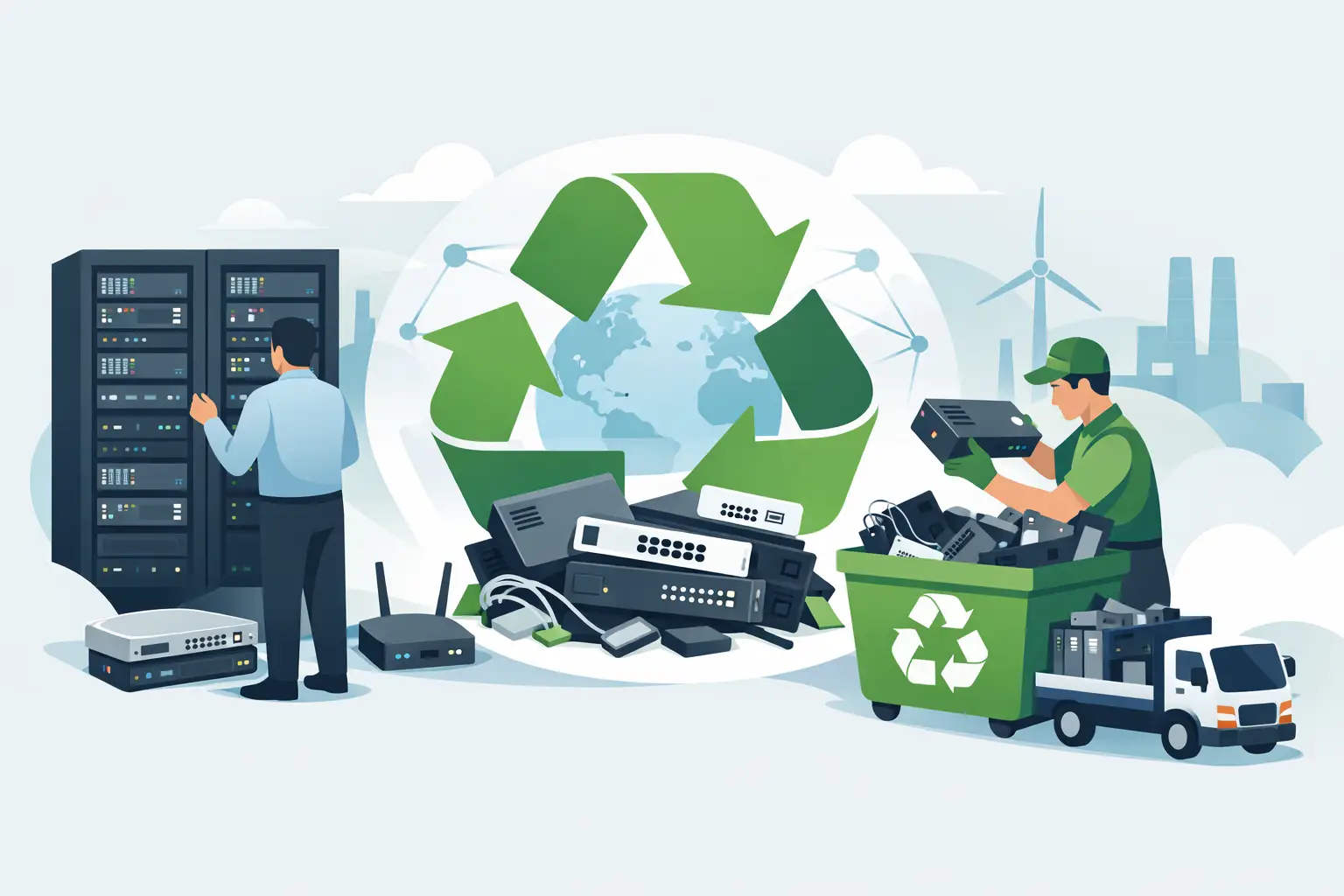
A closet full of retired switches, firewalls, and wireless access points rarely looks urgent until an audit, office move, or hardware refresh puts it on someone’s desk. At that point, choosing the right network equipment recycling company becomes less about clearing space and more about risk control. The wrong vendor can create data exposure, documentation gaps, and environmental liability that stay with your organization long after the pickup is done.
For businesses, schools, nonprofits, and public agencies, network gear disposal is not the same as tossing out old peripherals. Routers, switches, load balancers, security appliances, and telecom hardware often hold configuration data, stored credentials, asset tags, and internal network information. They also contain regulated electronic components that should not end up in landfill or be exported through questionable downstream channels. A qualified recycling partner should be able to address both sides of the job – secure handling and compliant processing.
What a network equipment recycling company should actually handle
A capable vendor should accept more than a narrow slice of IT equipment. In most office and enterprise environments, network retirement projects include mixed loads. That may mean core and edge switches, routers, modems, firewalls, access points, patch panels, rack-mounted appliances, servers, UPS units, VoIP phones, cabling, and related peripherals moving out at the same time.
This matters because disposal projects rarely happen in neat categories. An IT manager replacing network infrastructure may also need monitors, desktops, storage devices, batteries, and decommissioned server hardware removed in the same pickup. If a recycler only wants the easy items, your team is left coordinating multiple vendors, which adds delays and weakens chain of custody.
A practical service model is one that can manage broad commercial e-waste streams in a single scheduled pickup. That reduces internal labor and helps facilities, IT, and operations teams close out the project faster.
Data security is part of network equipment recycling
Many organizations still assume data destruction only applies to laptops and hard drives. That is too narrow. Network equipment can retain sensitive information in startup configurations, cached logs, VLAN structures, VPN settings, IP schemes, device certificates, and administrative credentials. Even when the storage is limited, the exposure can still be meaningful.
That does not mean every switch requires the same destruction method as a failed server drive. It does mean your recycler should understand the difference between equipment categories and apply the right handling process. In some cases, sanitization and documented processing are sufficient. In others, physical destruction of storage media or related components may be the better option.
If your organization handles regulated data, ask how the company manages equipment that may contain configuration or access information. Ask what documentation is available, whether serialized tracking is offered when needed, and how data-bearing devices are separated from non-data-bearing equipment during processing. Clear answers matter more than marketing language.
Compliance is not a side issue
A network equipment recycling company should be able to explain how materials are handled in line with state and federal requirements. For Bay Area organizations, that includes making sure electronic waste is processed responsibly and kept out of landfill. It also means avoiding recyclers that cannot clearly account for downstream handling.
The compliance issue is straightforward. When an organization disposes of electronic equipment, responsibility does not disappear just because the items left the building. If materials are dumped illegally, mishandled, or exported through noncompliant channels, that can become a reputational and operational problem.
A serious recycler should be prepared to discuss its process in plain terms. What happens after pickup? How are loads sorted? Which items are recycled, which are refurbished, and which require specialized handling? How are batteries and other regulated components managed? If those answers are vague, that is a warning sign.
Pickup logistics often decide whether the project gets done
For most commercial clients, the real obstacle is not willingness to recycle. It is operational friction. Old equipment sits in storage rooms because nobody has time to palletize it, move it between departments, or chase down a disposal vendor that only accepts drop-offs.
That is why pickup structure matters. A good provider makes it easy to remove obsolete network equipment without interrupting business operations. Qualified organizations with sufficient volume may be able to use a free pickup model, while smaller loads may require a paid service call. Neither approach is inherently better. What matters is whether the terms are clear upfront.
If you are managing equipment across multiple offices, campuses, or server rooms, ask about scheduling windows, building access requirements, loading dock coordination, and whether mixed loads are acceptable. For schools and larger facilities, timing can be just as important as price. A vendor that understands commercial logistics can help you avoid repeat handling and internal rescheduling.
When resale and buyback make sense
Not all retired network equipment is scrap. Depending on age, model, condition, and market demand, some assets may still have residual value. This is especially relevant when organizations are replacing enterprise-grade switches, firewalls, or server-related networking hardware on a planned refresh cycle rather than after complete failure.
A recycler that also evaluates equipment for reuse, liquidation, or buyback can help offset project costs. That said, not every load will qualify, and not every device is worth testing or remarketing. End-of-life status, missing components, physical damage, and obsolete firmware support all affect value.
The practical question is whether the company can distinguish between recyclable material and recoverable assets without slowing down the job. A balanced approach works best. If equipment has resale potential, it should be identified. If it does not, it should move directly into the compliant recycling stream without creating extra administrative work for your staff.
Questions to ask before hiring a network equipment recycling company
The best screening questions are operational. Do they serve commercial clients regularly? Can they pick up bulk loads from offices, campuses, and IT rooms? Do they handle both network hardware and related electronic waste? Can they support secure data destruction for items that require it? Will they provide the documentation your organization needs for internal records?
You should also ask about minimums. Some companies advertise pickup service but only for large volumes. Others will take smaller loads, but the service is fee-based. That is normal. The key is knowing the threshold before your team starts staging equipment.
For organizations in the San Francisco Bay Area, local coverage can make a practical difference. A provider already serving cities like San Francisco, Oakland, San Jose, Fremont, Palo Alto, and surrounding commercial corridors is more likely to understand building access issues, recurring business pickups, and the pace of regional office and IT turnover.
Red flags that create avoidable risk
If a vendor is vague about downstream processing, that is a problem. If they cannot explain how data-bearing equipment is handled, that is another. Extremely broad promises with no service terms, no mention of compliance, and no clear item categories usually signal a weak process.
Another red flag is a recycler that treats all equipment the same. Network gear, batteries, servers, monitors, and copy machines do not move through identical disposal paths. A company handling commercial electronics responsibly should be able to explain these differences and set expectations around any specialized charges or exceptions.
It is also worth being cautious with vendors that make disposal sound effortless but leave your team doing most of the work. If your staff still has to sort everything, haul items to an off-site location, and guess what qualifies, the service is not solving much.
Why the right partner saves more than floor space
Organizations usually start this process because they need to clear obsolete equipment. What they end up needing is a vendor that reduces administrative burden, protects data, and keeps disposal aligned with policy. That applies whether you are retiring ten access points from a small office or replacing racks of network hardware across multiple locations.
A dependable provider should make the job simpler, not more complicated. That means clear acceptance criteria, practical pickup options, secure handling where needed, and confidence that materials will be processed responsibly. For Bay Area businesses looking for a service-driven approach, companies such as I Got E-Waste are built around that operational reality – bulk collection, compliance, and secure disposition for commercial electronics.
If your storage room is filling up with retired network gear, the next step is not to wait for the next cleanup cycle. It is to work with a recycler that can remove the equipment properly, document the process clearly, and let your team move on to the next project.